



Article
Reservoir: the Henry Moore Institute’s new show is made entirely of wool, and it’s huge
Chapter 81
The New York-based artist’s first museum exhibition fills the Sculpture Galleries with brand new felt sculptures, all made in north-west India. It’s free and runs until 10 January 2027.
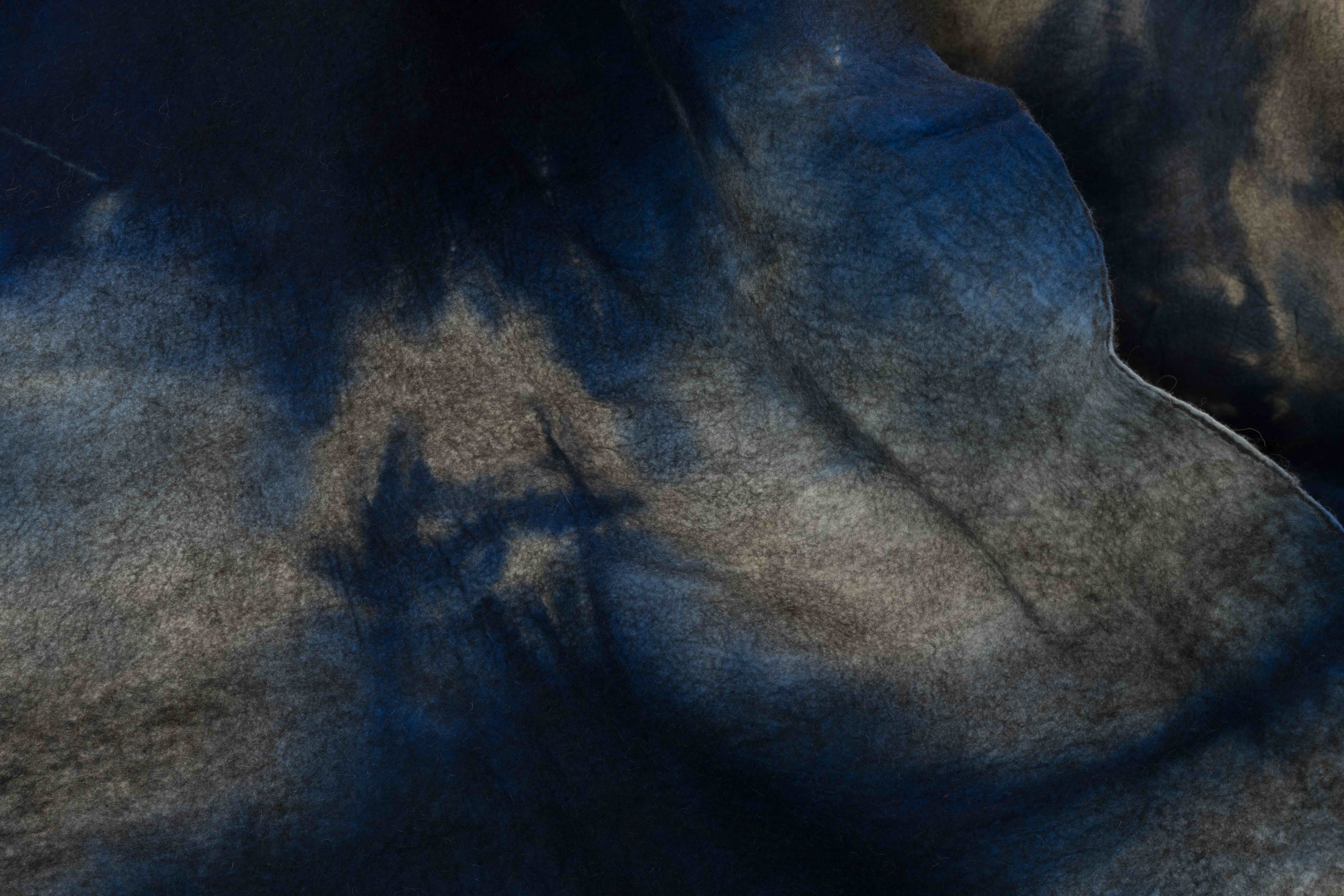
There is a mountain on The Headrow. It is almost seven metres long, around three metres high, and made of wool.
Blue Mountain is the centrepiece of Sagarika Sundaram: Reservoir, which opened at the Henry Moore Institute on 30 September and runs until 10 January 2027. It is the first museum exhibition by the Kolkata-born, New York-based artist, and everything in it is new. The works were made especially for the show in Kutch, north-west India, where Sundaram has been researching felt-making and dyeing techniques.
A city that knows its wool
Leeds made its fortune on wool, so there’s something fitting about a show where the material does all the talking. Sundaram works with felt, one of the oldest ways of turning loose fibre into cloth. Wool is compressed with water, soap and friction, then dyed, layered and compressed again, over and over. Only at the end are the forms cut open to show the colour and space held inside. Nothing gets added. In the Institute’s words, “incision becomes an act of excavation.”
The result is sculpture that is soft to look at but deals in the same things as bronze or stone: volume, void, weight and how your body moves around it.
What’s in the galleries
The exhibition runs across three rooms.
Blue Mountain. The big one. Hand tie-dyed felt in natural greys and deep indigo, curving in and out to create two cave-like hollows you can walk around and partly into. Sundaram has likened its wrinkled, pebbly surface to an elephant’s knee, which once you’ve heard it, you can’t unsee.
Dancer. A felt spiral hanging from ceiling to almost floor, somewhere between a shell and an orange peel, streaked with brown, off-white and red. The trick, as Sundaram puts it, is “one cloth and one cut”: the whole form comes from a single incision through one thick slab of felt.
Rope. Exactly what it says, at a scale roughly the thickness of a loose hug. Thousands of hand-spun threads, dyed reds, yellows and blues alongside natural browns and greys, twisted together by hand. It’s a nod to rope as one of humanity’s earliest technologies, and the ends are where to look for detail.
Glossolalia. A sulphur-yellow creature with outstretched, octopus-like arms trailing hundreds of wool and silk tendrils. The title means speaking in tongues. It sits alone in the final gallery, and it is not shy.
Tours, talks and a half-term workshop
- Free exhibition tours: every Tuesday, Thursday, Saturday and Sunday from 10 October, 11:00 and 14:30, book here
- Curator’s tour with Laurence Sillars, Head of the Henry Moore Institute: Thursday 22 October, 18:00 to 19:00 (free, booking required)
- Textile Sculpture with Jane Claire Wilson, a family-friendly workshop in The Studio: Thursday 29 October, 11:00 to 16:30. Book here.
- British Sign Language tour and workshop: Saturday 14 November, 11:00 to 14:00 (free, booking required)
There’s also a five-stop audio guide featuring Sundaram talking through four of the works, available on handsets in the gallery or by scanning the QR codes on the labels.
Plan your visit
Sagarika Sundaram: Reservoir is at the Henry Moore Institute, 74 The Headrow, Leeds LS1 3AH, from 30 September 2026 to 10 January 2027. Entry is free. The Institute is open Tuesday to Sunday, 10:00 to 17:00. For a quieter visit, Tuesday mornings are recommended. Step-free access is via the Cookridge Street entrance.
More at henry-moore.org
 Photo Credit: Rob Harris
 Photo Credit: Rob Harris
 Photo Credit: Rob Harris
 Photo Credit: Rob Harris
 Photo Credit: Rob Harris
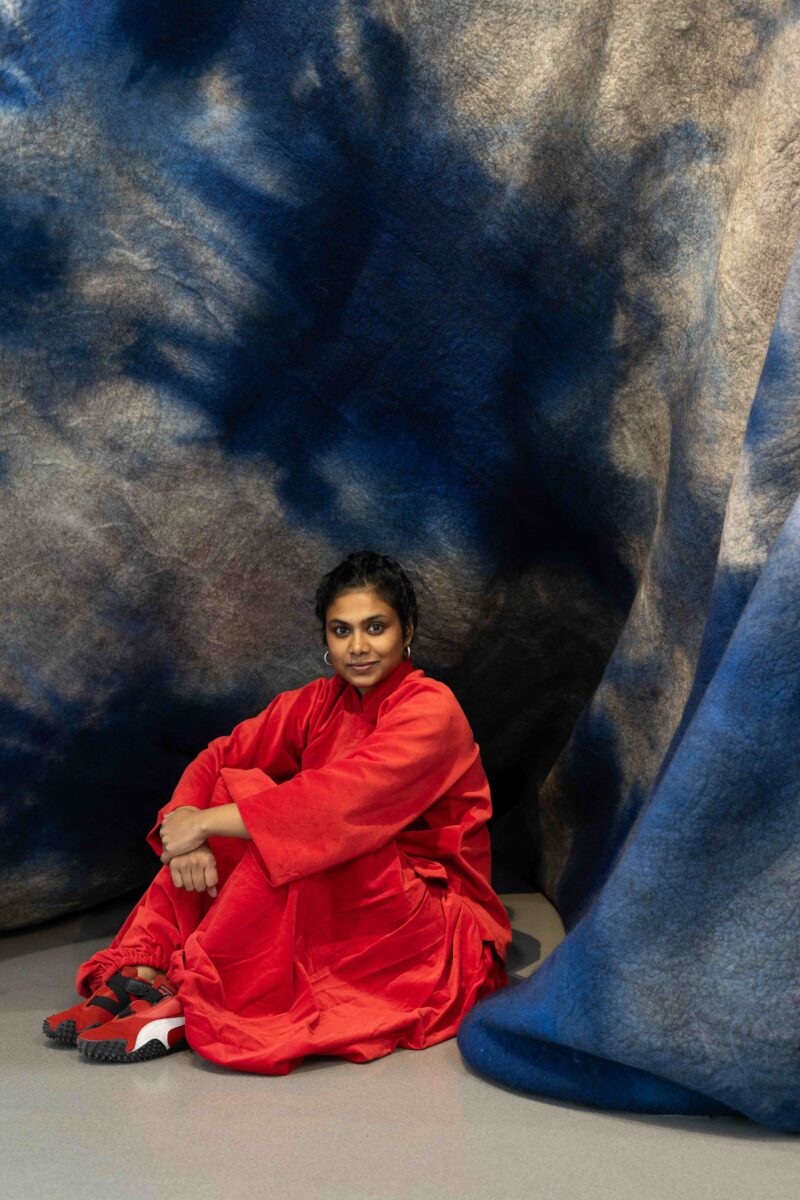 Artist Sagarika Sundaram sits with her work Blue Mountain 2026 in her exhibition Reservoir at Henry Moore Institute. Courtesy the artist, Henry Moore Institute and Alison Jacques, London Photo: Rob Harris